17 June 2026: Prime Minister Presents the State of the Nation Report to the Joint Sitting of Parliament
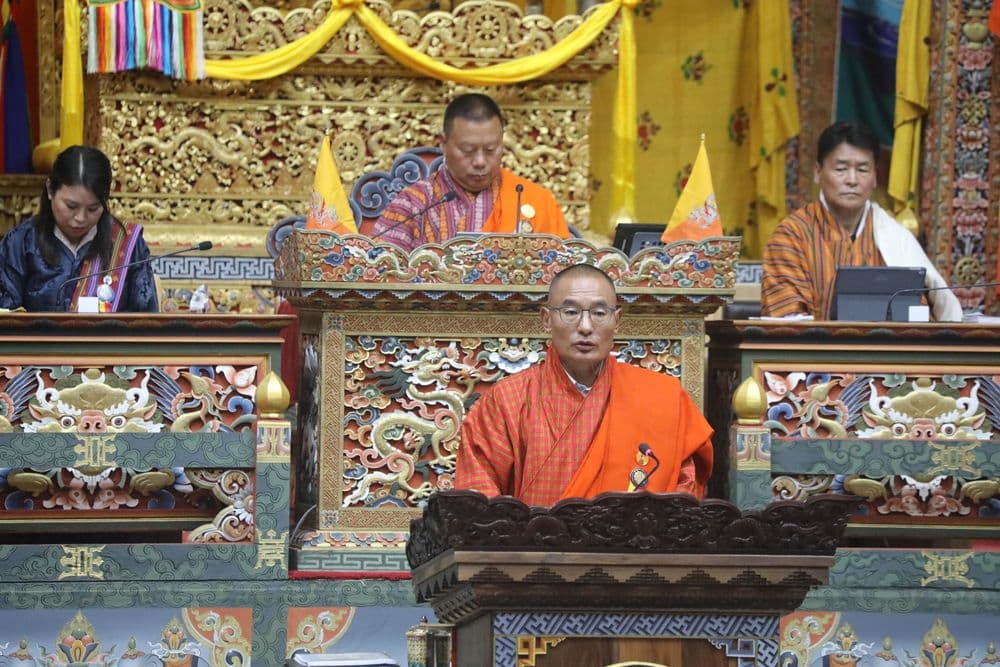
16 June 2026As provided under Article 10, Section 10 of the Constitution of the Kingdom of Bhutan, Prime Minister Dasho Tshering Tobgay presented the Third Annual Report on the State of the Nation to the Joint Sitting of Parliament on 16 June 2026.
The Prime Minister presented the report in four chapters. Chapter 1- Tribute to His Majesty’s Twenty Years of Reign, Chapter 2-State of the Country, Chapter 3- Government Plans and Priorities for 2026-2027 and Chapter 4- Government’s Legislative Plans for 2026-2027.
The Prime Minister paid tribute to His Majesty The King’s two decades of reign, describing His Majesty as the Sovereign Guardian, Compassionate Parent, Object of Deepest Reverence, Source of Prosperity, Heroic Guardian of the Land, and the Life Force of the Wangchuck Dynasty. He highlighted His Majesty’s leadership in safeguarding Bhutan’s sovereignty, strengthening democracy, promoting socio-economic development, preserving cultural and spiritual heritage, and advancing transformative initiatives such as Gyalsung, De-suung, the Diamond Strategy, the 21st Century Economic Roadmap, and Gelephu Mindfulness City.
Under the State of the Country, the Prime Minister reported on the Results of the Mid-Term Review of the 13 FYP and the progress of the Eight National Flagship Programs on Economic Transformation, Twenty First Century Skilling, Educational Transformation, Healthy Drukyul, Digital Transformation, Transformational governance, Socio-cultural resilience and Community Vitality, and Ecological Diversity and Resilience.
The Prime Minister reported that Bhutan continues to enjoy peace, security, and stability under the leadership of His Majesty The King. He informed the Parliament that the Mid-Term Review (MTR) of the 13th Five-Year Plan had successfully addressed the Plan’s financing gap of Nu. 56 billion and is now projected to generate a surplus of approximately Nu. 20 billion through increased domestic revenue, development assistance, grants, and concessional financing.
The Prime Minister reported that Bhutan’s Gross Domestic Product (GDP) increased from Nu. 280 billion at the start of the 13th Plan to Nu. 364 billion, reflecting growth across key sectors including energy, agriculture, tourism, mining, manufacturing, and cottage and small industries. In the energy sector, hydropower generation capacity increased significantly following the commissioning of the 1,020 MW Punatsangchhu-II Hydropower Project and several smaller hydropower projects. The Government has also resumed work on major hydropower projects and formulated a National Energy Policy and Strategy targeting 25,000 MW generation capacity by 2040.
The Prime Minister highlighted progress in agriculture through the construction of chain-link fencing, irrigation systems, farm roads, and support for mechanisation and commercial farming. Tourism arrivals increased from over 103,000 in 2023 to nearly 210,000 in 2025, supported by international marketing campaigns and the development of new tourism products.
Under the Economic Stimulus Programme, approximately Nu. 3.3 billion has been disbursed as concessional loans to support businesses, start-ups, and cottage and small industries. The Government also approved 35 new Foreign Direct Investment projects worth Nu. 226 billion. On human capital development, the Prime Minister reported that more than 55,000 youth benefitted from skills and technical training programmes, while education reforms guided by His Majesty’s Royal Kasho on Education Reform continue to be implemented. Investments were made in school infrastructure, teacher development, early childhood education, and higher education opportunities.
In the health sector, major hospitals in Mongar, Samtse, and Gidakom were completed, while Bhutan achieved significant public health milestones, including the elimination of measles, rubella, leprosy, neonatal tetanus, and poliomyelitis. The Government also expressed concern over rising cases of non-communicable diseases and declining population growth rates.
The Prime Minister highlighted achievements in digital transformation, including the implementation of the National Digital Identity system, development of a National Artificial Intelligence Strategy, and efforts to establish a third internet gateway to strengthen connectivity and support the digital economy.
Despite these achievements, the Prime Minister identified overseas migration as Bhutan’s most pressing challenge, describing it as a significant national concern. More than 71,000 Bhutanese are currently working abroad. He emphasized that strengthening the economy, creating quality employment opportunities, and improving living conditions remain critical to addressing this issue.
The Prime Minister also noted that rising global fuel prices resulting from conflict in West Asia continue to pose challenges. However, he said Bhutan has been cushioned by His Majesty’s Fuel Price Kidu and uninterrupted petroleum supplies from India. The Government is now preparing a National Energy Security Strategy to reduce dependence on imported fossil fuels.
Looking ahead, the Government’s priorities for 2026–2027 will focus on accelerating economic transformation through the Gelephu Mindfulness City initiative, implementation of the Diamond Strategy, the 21st Century Economic Roadmap, digital transformation, education reform, healthcare improvement, workforce development, climate resilience, and governance reforms. The Prime Minister also outlined the Government’s legislative agenda for the coming fiscal year. Bills planned for submission to Parliament include the Surface Transport Bill, Housing Bill, Trade and Investment Bill, Consumer Protection (Amendment) Bill, Labour and Employment Bill, Customs Bill, Agriculture Bill, Water Bill, Child Protection Bill, and the Narcotic Drugs, Psychotropic Substances and Substance Abuse (Amendment) Bill.
In addition, several key policies are being developed and implemented, including the Foreign Direct Investment Policy, Education Policy, Policy to Support Parents with a Third Child, and the Rural Life Insurance Policy.
Concluding the report, the Prime Minister reaffirmed the Government’s commitment to fulfilling His Majesty The King’s vision for the nation and called upon all Bhutanese to contribute towards nation-building, economic transformation, and a prosperous future for Bhutan.
Latest News
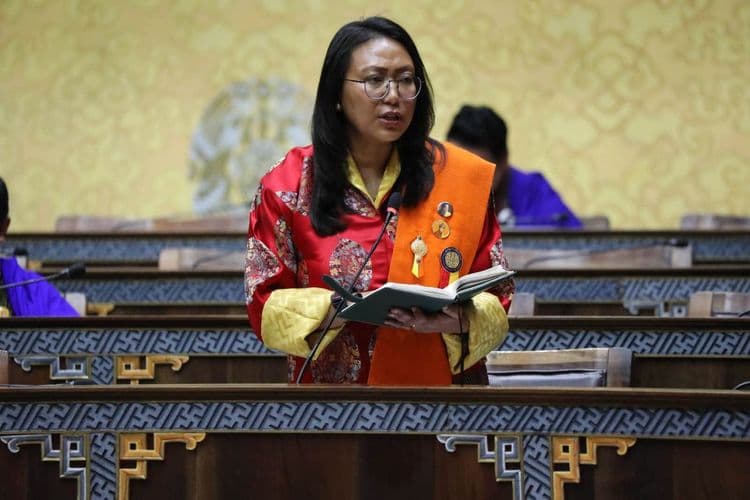
𝐐𝐮𝐞𝐬𝐭𝐢𝐨𝐧 𝐇𝐨𝐮𝐫 - 𝐐𝐮𝐞𝐬𝐭𝐢𝐨𝐧𝐬 𝐭𝐨 𝐌𝐢𝐧𝐢𝐬𝐭𝐫𝐢𝐞𝐬 𝐢𝐧 𝐆𝐫𝐨𝐮𝐩 𝐁
2026-11-17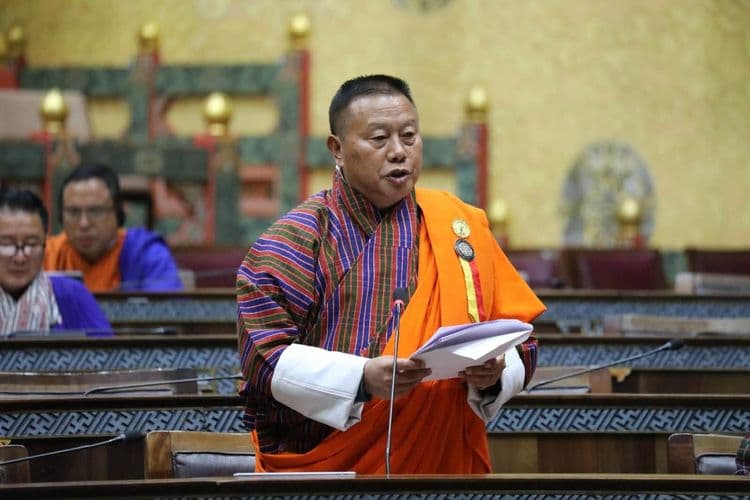
𝐀𝐜𝐭𝐢𝐨𝐧 𝐓𝐚𝐤𝐞𝐧 𝐑𝐞𝐩𝐨𝐫𝐭 𝐨𝐧 𝐭𝐡𝐞 𝐫𝐞𝐬𝐨𝐥𝐮𝐭𝐢𝐨𝐧 𝐭𝐨 𝐩𝐫𝐨𝐯𝐢𝐝𝐞 𝐬𝐮𝐩𝐩𝐨𝐫𝐭 𝐚𝐧𝐝 𝐚𝐦𝐞𝐧𝐢𝐭𝐢𝐞𝐬 𝐭𝐨 𝐩𝐞𝐨𝐩𝐥𝐞 𝐫𝐞𝐬𝐢𝐝𝐢𝐧𝐠 𝐢𝐧 𝐛𝐨𝐫𝐝𝐞𝐫𝐢𝐧𝐠 𝐚𝐫𝐞𝐚𝐬.
2026-11-17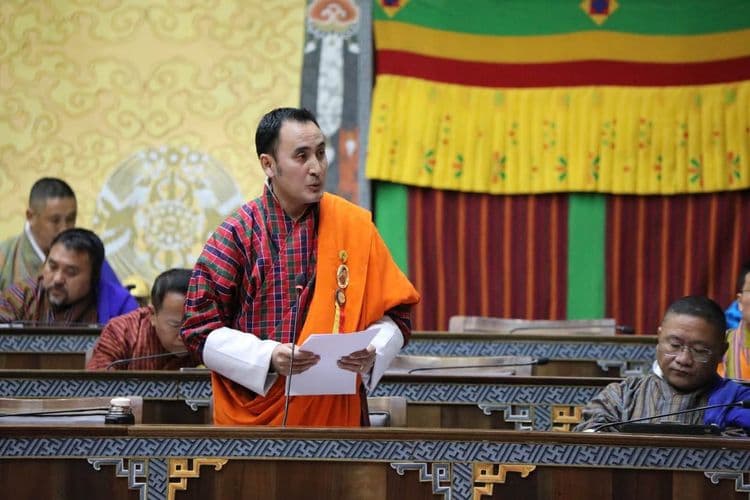
𝐀𝐜𝐭𝐢𝐨𝐧 𝐓𝐚𝐤𝐞𝐧 𝐑𝐞𝐩𝐨𝐫𝐭 𝐨𝐧 𝐬𝐭𝐫𝐞𝐧𝐠𝐭𝐡𝐞𝐧𝐢𝐧𝐠 𝐫𝐞𝐠𝐮𝐥𝐚𝐭𝐨𝐫𝐲 𝐞𝐧𝐟𝐨𝐫𝐜𝐞𝐦𝐞𝐧𝐭 𝐚𝐧𝐝 𝐢𝐧𝐬𝐭𝐢𝐭𝐮𝐭𝐢𝐧𝐠 𝐚 𝐳𝐞𝐫𝐨 𝐭𝐨𝐥𝐞𝐫𝐚𝐧𝐜𝐞 𝐩𝐨𝐥𝐢𝐜𝐲 𝐨𝐧 𝐩𝐨𝐫𝐧𝐨𝐠𝐫𝐚𝐩𝐡𝐢𝐜 𝐫𝐞𝐥𝐚𝐭𝐞𝐝 𝐚𝐧𝐝 𝐯𝐢𝐨𝐥𝐞𝐧𝐭 𝐨𝐧𝐥𝐢𝐧𝐞 𝐜𝐨𝐧𝐭𝐞𝐧𝐭 𝐢𝐧 𝐭𝐡𝐞 𝐊𝐢𝐧𝐠𝐝𝐨𝐦 𝐨𝐟 𝐁𝐡𝐮𝐭𝐚𝐧
2026-11-16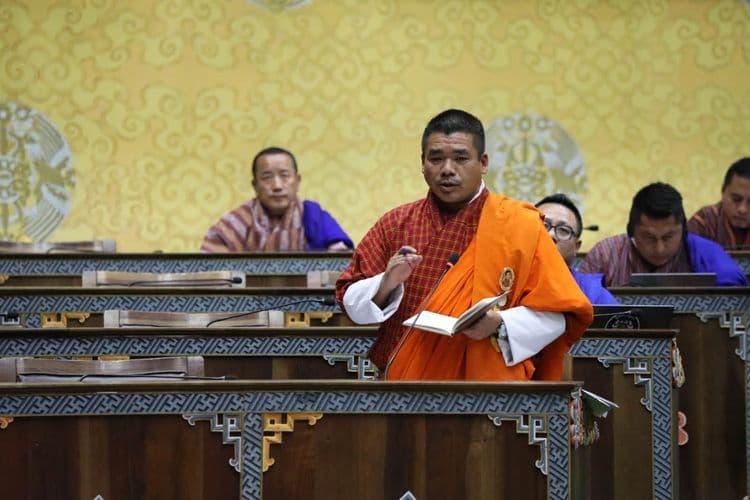
𝐀𝐜𝐭𝐢𝐨𝐧 𝐓𝐚𝐤𝐞𝐧 𝐑𝐞𝐩𝐨𝐫𝐭 𝐨𝐧 𝐢𝐧𝐜𝐫𝐞𝐚𝐬𝐢𝐧𝐠 𝐭𝐡𝐞 𝐧𝐮𝐦𝐛𝐞𝐫 𝐨𝐟 𝐬𝐭𝐨𝐫𝐞𝐲𝐬 𝐟𝐫𝐨𝐦 𝟑 𝐭𝐨 𝟓 𝐢𝐧 𝐚𝐥𝐥 𝐃𝐳𝐨𝐧𝐠𝐤𝐡𝐚𝐠 𝐘𝐞𝐧𝐥𝐚𝐠 𝐓𝐡𝐫𝐨𝐦𝐬
2026-11-16