
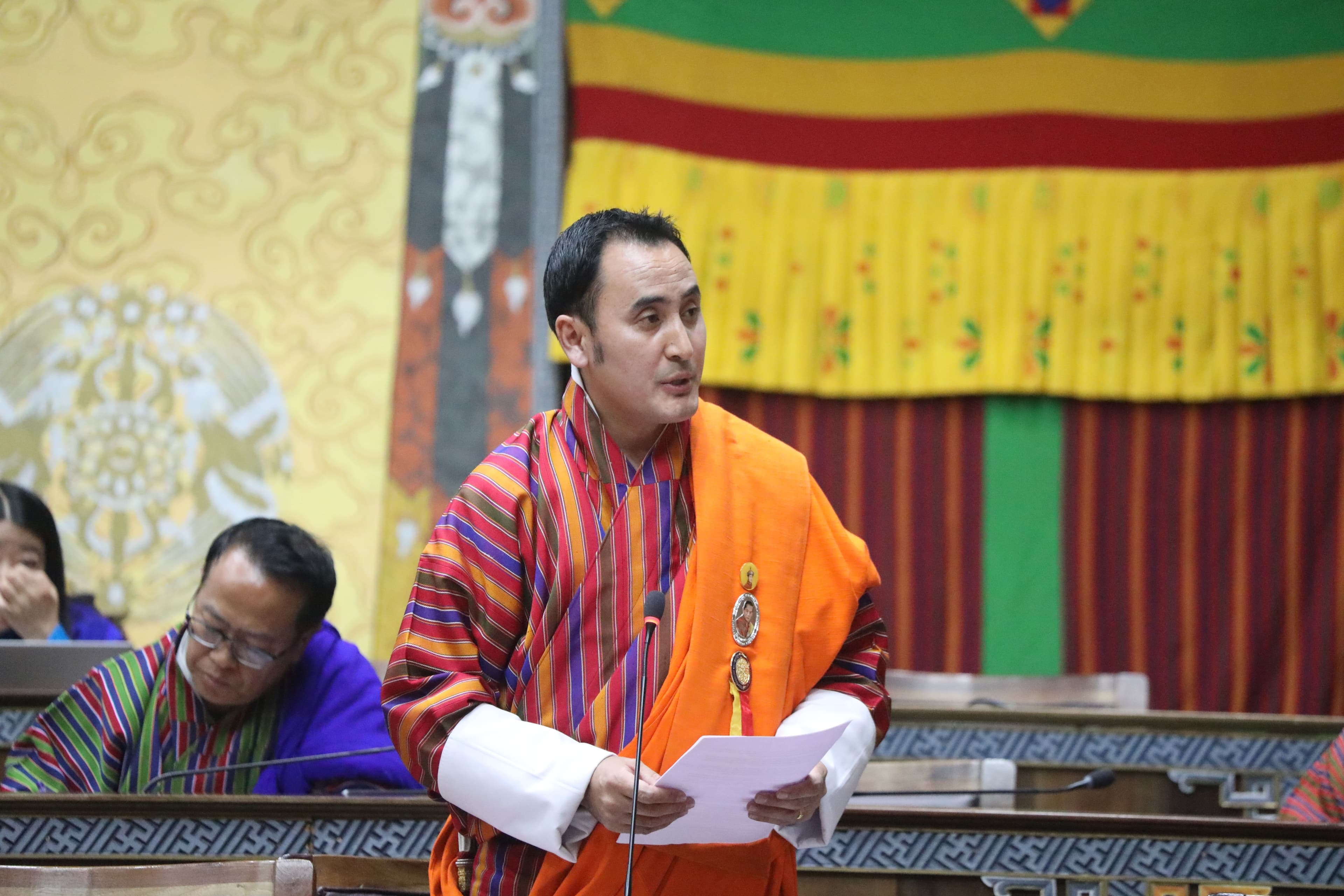
𝐐𝐮𝐞𝐬𝐭𝐢𝐨𝐧 𝐇𝐨𝐮𝐫: 𝐐𝐮𝐞𝐬𝐭𝐢𝐨𝐧𝐬 𝐭𝐨 𝐌𝐢𝐧𝐢𝐬𝐭𝐫𝐢𝐞𝐬 𝐢𝐧 𝐆𝐫𝐨𝐮𝐩 𝐀
09 June 2026In the third round of Question Hour held today for the Ministries in Group A, Members raised key issues concerning higher education financing, credit lending rates, tourism sector development, and the implementation of the Economic Stimulus Programme (ESP). Four oral questions and five written questions were tabled. Of the four oral questions, two were directed to the Ministry of Finance and two to the Ministry of Industry, Commerce and Employment.
The Member from Menbi–Tshenkhar Constituency questioned the Ministry of Industry, Commerce and Employment on the closure of applications under the Economic Stimulus Programme (ESP) Education Loan Scheme and sought clarification on the growing demand for higher education financing, equitable access to education loans, and measures to ensure that deserving students are not left behind in future funding allocations.
In response, the Minister for Industry, Commerce and Employment stated that the scheme has been highly beneficial for students pursuing higher education. Due to overwhelming demand, participating financial institutions initially closed applications after reaching the target on the first day. However, following concerns raised by parents and students, the Government directed banks to keep the application window open for one month. The Minister assured the House that additional budgetary support would be provided if necessary and emphasized that the scheme is intended to assist students from low-income and financially disadvantaged families. To date, around 500 students have benefited from the scheme. Loan approvals are granted based on established eligibility criteria through a transparent process to ensure fairness, accountability, and equitable access.
The Member from Radhi–Sakteng Constituency questioned the Ministry of Finance on credit lending rates in Bhutan. The Member highlighted concerns regarding the gap between lending and deposit interest rates, non-performing loans, particularly among farmers, and sought clarification on measures being taken to reduce lending rates to support businesses and private sector growth.
In response, the Finance Minister informed the House that the Ministry of Finance and the Royal Monetary Authority (RMA) have been working closely with financial institutions to improve access to financial services and review interest rate policies. As of December 2025, the weighted average lending rate stood at 9.4 percent, while the weighted average deposit rate was 5.1 percent, resulting in a spread of 4.3 percent. The Minister explained that lending rates are determined based on the marginal cost of funds, the negative carry on the cash reserve ratio, and operating costs. To rationalize lending rates, the RMA has revised components such as operating costs and risk premiums, resulting in a reduction of the minimum lending rate from 6.1 percent to 5.72 percent. The Minister further stated that lending rates also incorporate credit risk, tenure risk, and business strategy premiums. To strengthen risk assessment and address concerns regarding borrower profiling, the RMA has introduced an Expected Credit Loss methodology in line with International Financial Reporting Standards (IFRS), effective from April 2026.
The Member from Khamdang–Ramjar Constituency raised concerns over the under- utilization of funds allocated for tourism development under the 13th Five-Year Plan and sought clarification on measures to support the tourism and hospitality sector.
In response, the Minister for Industry, Commerce and Employment highlighted that tourism remains a key contributor to Bhutan's economy, supporting employment, private sector growth, and regional development. While acknowledging that some allocated funds have been utilized more slowly than expected, the Minister assured the House that efforts are underway to accelerate implementation and ensure the effective use of available resources. The Minister further informed the House that the Government is strengthening the tourism and hospitality sector through targeted interventions, infrastructure development, service improvements, and initiatives aimed at increasing tourist arrivals and enhancing visitor experiences.
The Member from Drametse–Ngatshang Constituency sought clarification on actions taken following the Anti-Corruption Commission's investigation into the Economic Stimulus Programme (ESP), including measures to address the misuse of funds and strengthen accountability.
The Finance Minister informed the House that the monetary policy interventions under the Economic Stimulus Programme (ESP) were implemented through the Royal Monetary Authority (RMA) and participating financial institutions. Drawing lessons from previous loan programmes implemented through the BOIC and CSI, which had faced public criticism over alleged bias, the Minister said the Government had deliberately entrusted the implementation of the programme to financial institutions through the RMA to ensure transparency and avoid direct government involvement in the loan disbursement process.
The Minister further stated that the ESP guidelines were formulated by the ESP Steering Committee, comprising three Cabinet Ministers, three Government Secretaries, the Governor of the RMA, the Chief Executive Officer of the Bhutan Development Bank Limited (BDBL), and the Director General of the Department of OCASC. He clarified that the Steering Committee’s role was limited to approving the guidelines, while the actual loan disbursements were independently carried out by financial institutions under the supervision of the RMA.
Responding to a question on the recovery of ESP funds identified by the Anti-Corruption Commission (ACC) as having been improperly disbursed, the Finance Minister informed the House that the funds associated with all three projects had been returned to the ESP pool. He clarified that only one of the three projects had actually received a loan disbursement, while the other two, despite being approved by participating financial institutions, had not received any funds. The Royal Monetary Authority (RMA) subsequently recovered the disbursed amount from the concerned bank and halted any further releases in accordance with the ACC's directives.
On the question concerning administrative action against financial institutions and officials for failing to exercise due diligence and proper oversight, the Minister said stated that the RMA’s review of the ESP medium-category loan portfolios, together with the ACC investigation findings, identified instances of non-compliance with the ESP Guidelines and other regulatory requirements. Consequently, the RMA imposed monetary penalties ranging from approximately Nu. 700,000 to Nu. 1.7 million on three financial institutions and directed them to rectify identified deficiencies. The respective Boards of Directors also took administrative action against responsible officials, including warnings and written reprimands. However, the ACC found no conclusive evidence of corruption in the approval and disbursement of ESP loans.
The Minister further informed the House that the RMA had completed its review of medium-scale ESP loans. Of the 149 applications received by the Bhutan Development Bank Limited (BDBL), 112 were rejected due to non-compliance with eligibility criteria, adverse Credit Information Bureau records, applicant withdrawals, or lack of technical and economic viability. A total of 37 projects worth Nu. 1.91 billion were approved, while four cases under ACC investigation were excluded from the review.
Addressing concerns over systemic weaknesses, the Minister said the RMA review identified shortcomings in documentation controls, record management, project monitoring, and compliance with lending procedures. To strengthen governance and restore public confidence, financial institutions have been directed to implement a comprehensive Loan Origination System (LOS) and enhance credit governance frameworks. The new system is expected to improve transparency, strengthen regulatory compliance, establish a complete audit trail for lending decisions, and enhance accountability across the loan approval and administration process.
Five written questions were also submitted to the Ministry of Energy and Natural Resources and the Ministry of Infrastructure and Transport on issues including riverbank protection and retaining wall construction in Trashiyangtse, road infrastructure challenges, and other constituency-related development concerns.
Latest News
𝐐𝐮𝐞𝐬𝐭𝐢𝐨𝐧 𝐇𝐨𝐮𝐫: 𝐐𝐮𝐞𝐬𝐭𝐢𝐨𝐧𝐬 𝐭𝐨 𝐌𝐢𝐧𝐢𝐬𝐭𝐫𝐢𝐞𝐬 𝐢𝐧 𝐆𝐫𝐨𝐮𝐩 𝐀
2026-06-09Read More
𝐀𝐜𝐭𝐢𝐨𝐧 𝐓𝐚𝐤𝐞𝐧 𝐑𝐞𝐩𝐨𝐫𝐭 𝐨𝐧 𝐭𝐡𝐞 𝐧𝐞𝐞𝐝 𝐭𝐨 𝐝𝐞𝐜𝐞𝐧𝐭𝐫𝐚𝐥𝐢𝐳𝐞 𝐜𝐞𝐫𝐭𝐚𝐢𝐧 𝐛𝐮𝐝𝐠𝐞𝐭𝐚𝐫𝐲 𝐟𝐮𝐧𝐜𝐭𝐢𝐨𝐧𝐬 𝐭𝐨 𝐭𝐡𝐞 𝐋𝐨𝐜𝐚𝐥 𝐆𝐨𝐯𝐞𝐫𝐧𝐦𝐞𝐧𝐭𝐬 𝐟𝐨𝐫 𝐬𝐦𝐚𝐥𝐥 𝐝𝐞𝐯𝐞𝐥𝐨𝐩𝐦𝐞𝐧𝐭𝐚𝐥 𝐚𝐜𝐭𝐢𝐯𝐢𝐭𝐢𝐞𝐬 𝐢𝐧 𝐆𝐞𝐰𝐨𝐠𝐬 𝐛𝐲 𝐌𝐢𝐧𝐢𝐬𝐭𝐫𝐲 𝐨𝐟 𝐅𝐢𝐧𝐚𝐧𝐜𝐞
2026-06-08Read More
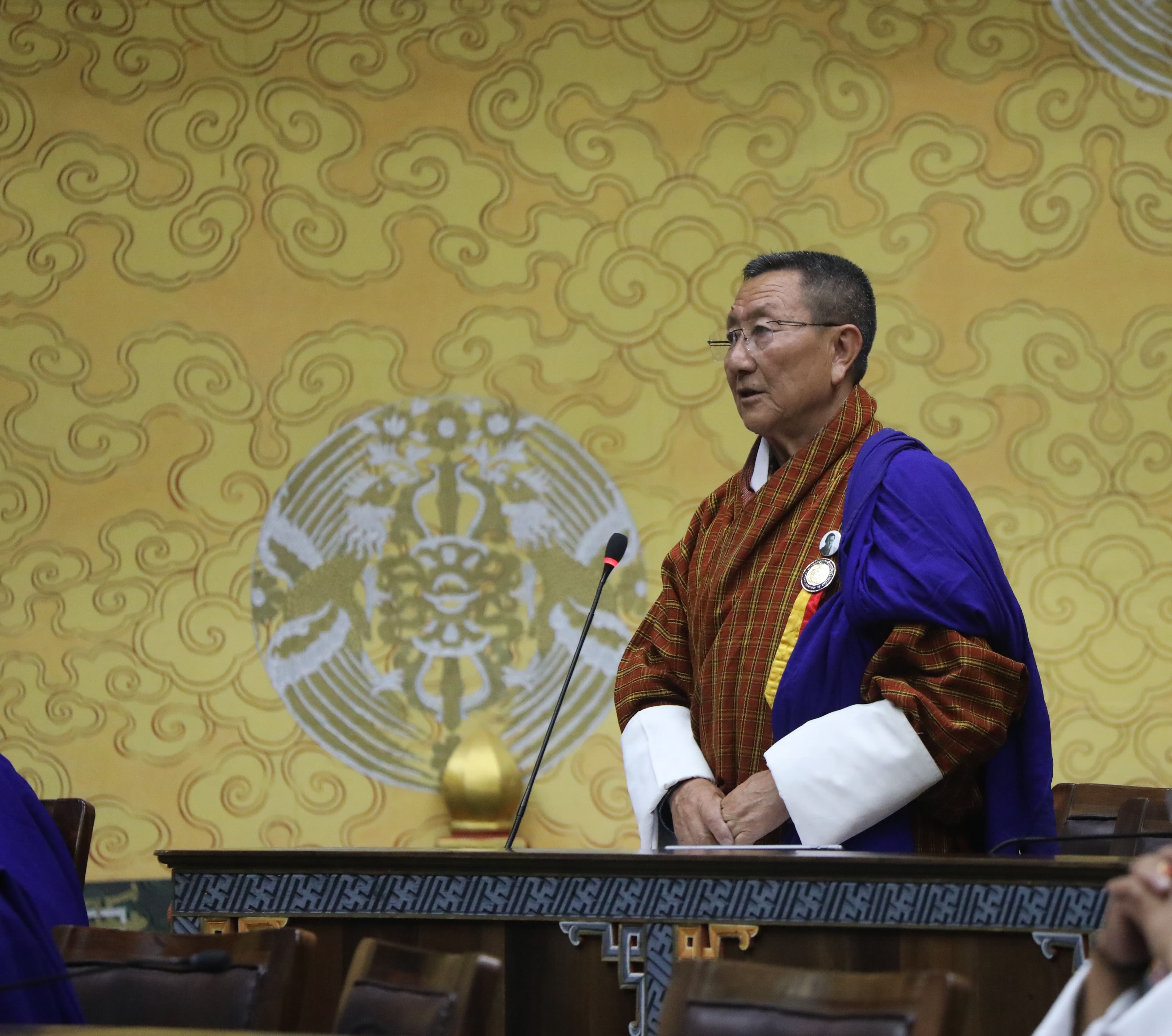
The National Assembly Re-deliberates on the Goods and Services Tax (Amendment) Bill of Bhutan, 2026
2026-06-08Read More
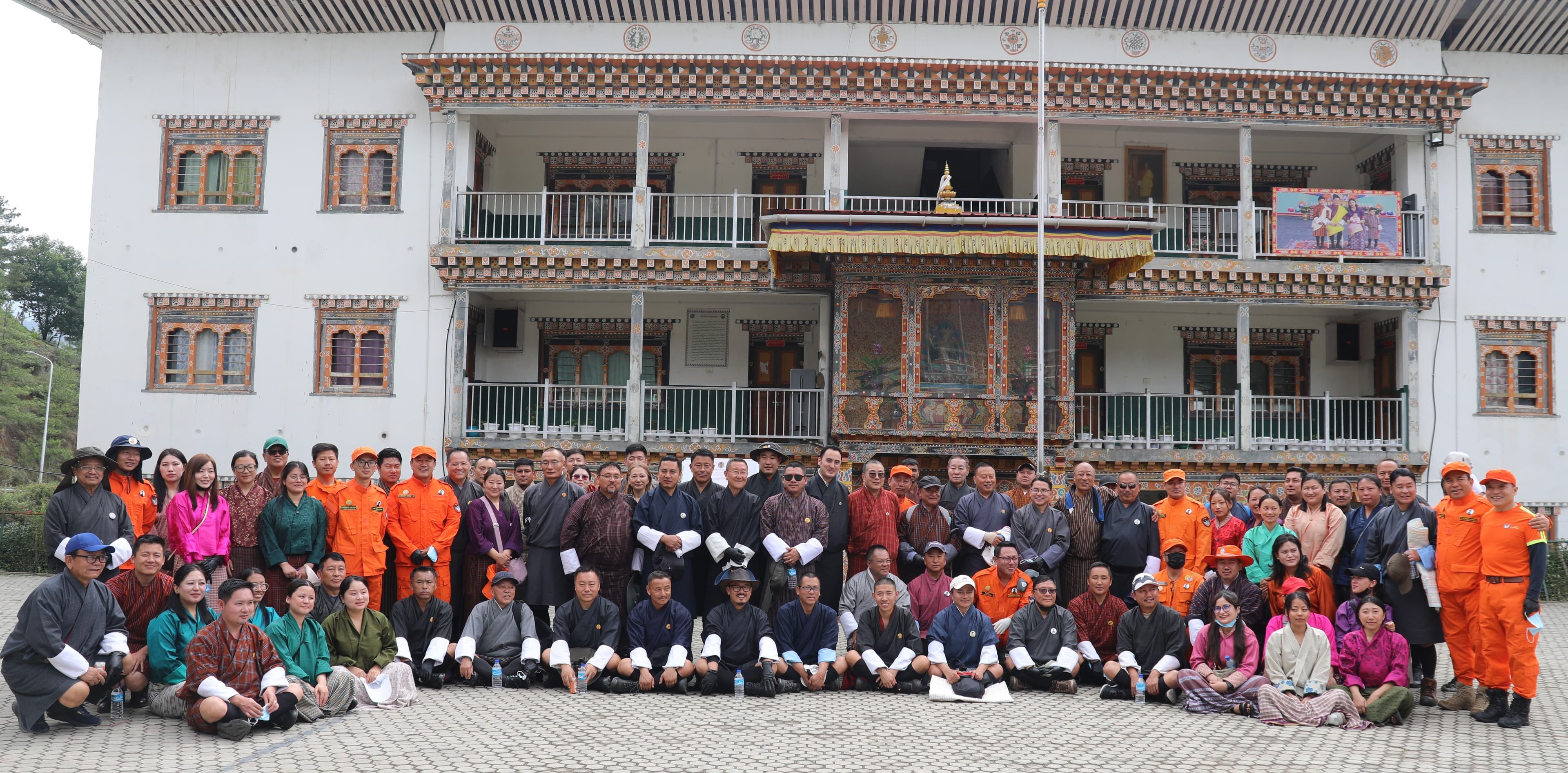
Parliamentarians Participate in Samtenling Stream Cleaning Programme and Sign Joint Commitment on River Protection
2026-06-06Read More